
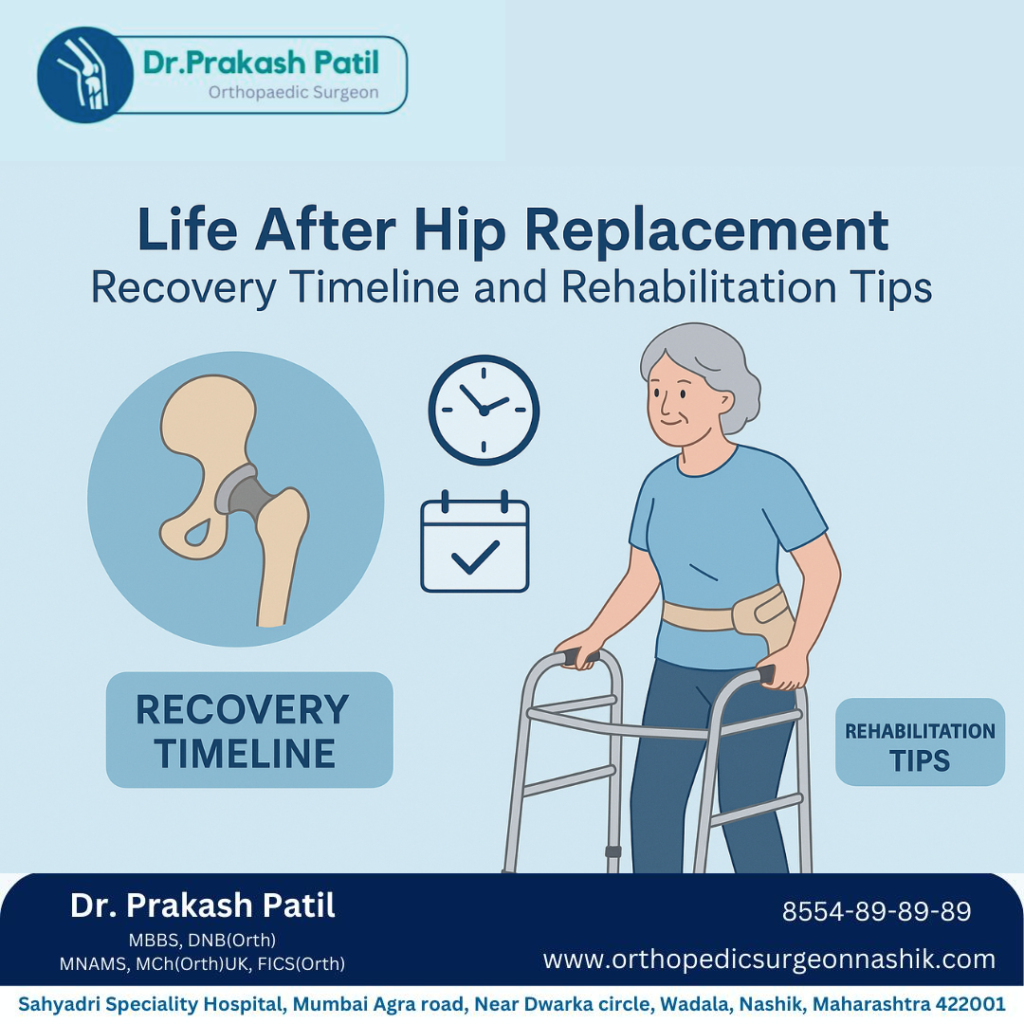
Undergoing a hip replacement is a life-changing decision, often recommended for those struggling with severe arthritis, fractures, or chronic hip pain. While the surgery itself is a significant step toward regaining mobility and reducing pain, understanding the recovery process and following proper rehabilitation strategies is crucial to achieving optimal results. Dr. Prakash Patil, a leading orthopedic doctor in Nashik, emphasizes that knowing what to expect post-surgery can make the recovery smoother and more effective.
Understanding Hip Replacement
Hip replacement surgery involves replacing the damaged hip joint with an artificial implant, restoring function and alleviating pain. While medical advancements have made this procedure safer and more efficient, a structured recovery plan is essential. Choosing the right orthopedic doctor in Nashik ensures proper surgical techniques and personalized care throughout the healing process.
Recovery Timeline After Hip Replacement
Recovery after hip replacement surgery varies depending on age, overall health, and adherence to rehabilitation protocols. Here’s a general timeline to guide you:
Week 1–2: Hospital Recovery
After surgery, patients typically spend a few days in the hospital. During this time, the medical team focuses on pain management, wound care, and early mobilization. Most patients are encouraged to start moving their legs and walking with the help of a walker or crutches. Dr. Patil advises that early movement is crucial to prevent blood clots and promote healing.
Week 3–6: Initial Mobility and Home Care
Once discharged, patients continue physical therapy at home or in a rehabilitation facility. Gentle exercises focusing on hip flexibility, strength, and balance are introduced. Walking distances gradually increase, and reliance on assistive devices starts to decrease. Monitoring for signs of infection, swelling, or unusual pain is essential during this phase.
Week 6–12: Strength Building and Normal Activities
By this stage, most patients can walk independently and perform light daily activities. Physical therapy shifts toward strengthening muscles around the hip and improving overall mobility. Simple exercises like leg raises, bridges, and resistance training are recommended. Many patients can resume driving and light household chores after medical clearance.
3–6 Months: Advanced Rehabilitation
At this point, patients can return to more demanding activities like climbing stairs, low-impact sports, or yoga. Continued physiotherapy helps in regaining full hip function and improving stamina. Regular follow-ups with your orthopedic doctor in Nashik ensure that the hip joint is healing well and the implant is functioning optimally.
6–12 Months: Full Recovery
Complete recovery varies but most patients experience significant improvement in pain relief, strength, and mobility within a year. Patients are encouraged to maintain an active lifestyle, avoid high-impact activities that could damage the implant, and adhere to a joint-friendly exercise regimen.
Rehabilitation Tips for a Successful Recovery
Recovery after hip replacement is not just about following a timeline—it’s about actively participating in your rehabilitation. Here are some essential tips:
- Follow Your Doctor’s Advice
Adherence to post-operative instructions from your orthopedic doctor in Nashik is vital. This includes medication schedules, wound care, and activity restrictions. - Physical Therapy is Key
Regular physiotherapy exercises enhance flexibility, strengthen muscles, and improve balance. Avoid skipping sessions, as consistent effort directly impacts recovery speed. - Gradual Return to Activities
While it’s tempting to resume normal activities quickly, gradual progression is safer. Avoid heavy lifting, running, or high-impact sports until cleared by your doctor. - Maintain a Healthy Diet
Proper nutrition supports healing. Include protein-rich foods, vitamins, and minerals to aid tissue repair and bone health. Staying hydrated is equally important. - Prevent Complications
Watch for signs of infection, blood clots, or unusual pain. Early detection and prompt medical attention can prevent serious complications. - Use Assistive Devices Properly
Walkers, crutches, or canes help maintain balance and reduce stress on the new hip. Ensure correct usage to avoid falls or strain. - Mind Your Posture and Movements
Avoid crossing legs, bending excessively, or twisting your hip. Proper posture and safe movements reduce the risk of dislocation or injury.
Lifestyle After Hip Replacement
Hip replacement in Nashik allows many patients to regain independence and enjoy an active lifestyle. Swimming, cycling, walking, and low-impact exercises are excellent for maintaining joint health. Weight management is also critical to reduce stress on the hip and prolong implant life.
Dr. Prakash Patil, a trusted orthopedic doctor in Nashik, stresses that patients who actively participate in their rehabilitation, follow medical advice, and maintain a healthy lifestyle tend to experience long-lasting benefits and improved quality of life.
Final Thoughts
Life after hip replacement can be rewarding when approached with proper knowledge and care. By understanding the recovery timeline and incorporating effective rehabilitation strategies, patients can achieve pain relief, improved mobility, and a return to everyday activities. Consulting an experienced orthopedic doctor in Nashik like Dr. Prakash Patil ensures personalized guidance, reducing risks and enhancing recovery outcomes.